

How to Turn Your Interior Design Website Into a Client-Booking Machine
Ninety-eight percent of website visitors don’t convert. Let that sink in. That means only 2 out of every 100 people who visit a website actually move forward and become paying customers.
If that feels a little discouraging, know you’re not alone. Most interior designers have no idea how to create a website that acts like a high-converting salesperson 24/7. As designers, we know how to craft beautiful, eye-catching spaces, but a stunning online portfolio alone won’t turn your website into a client-booking machine.
What will?
A clear strategy. It’s more than design. It’s more than structure. It’s a path, a process, that takes the audience through a series of events that draws them further and further in.
In this blog, I’ll show you the steps you need to take to finally get your website to work alongside you.

The 5 levers of a high-converting design website
Your website should never be designed to resemble a static brochure (here’s what we do and who we are). Yes, that information matters, but a website’s job is far more important than laying out basic information.
Instead, think of it as a series of five levers that can be adjusted with time. These five parts work together to create a seamless experience where clients learn to like you, trust you, and ultimately convert to paid customers.
Here are the five levers that move clients through your interactive process:
Findability — Clients are able to quickly and easily find your website
Clarity — They find the entire experience easy to understand and follow
Credibility — They feel confident in your expertise and immediately trust you
Frictionless Booking — Your website flows nicely, and clients find it’s easy to sign up, book, or contact you
Nurture — You stay in their orbit even if they’re not ready to commit now
Let’s dig a little deeper into each of these levers.
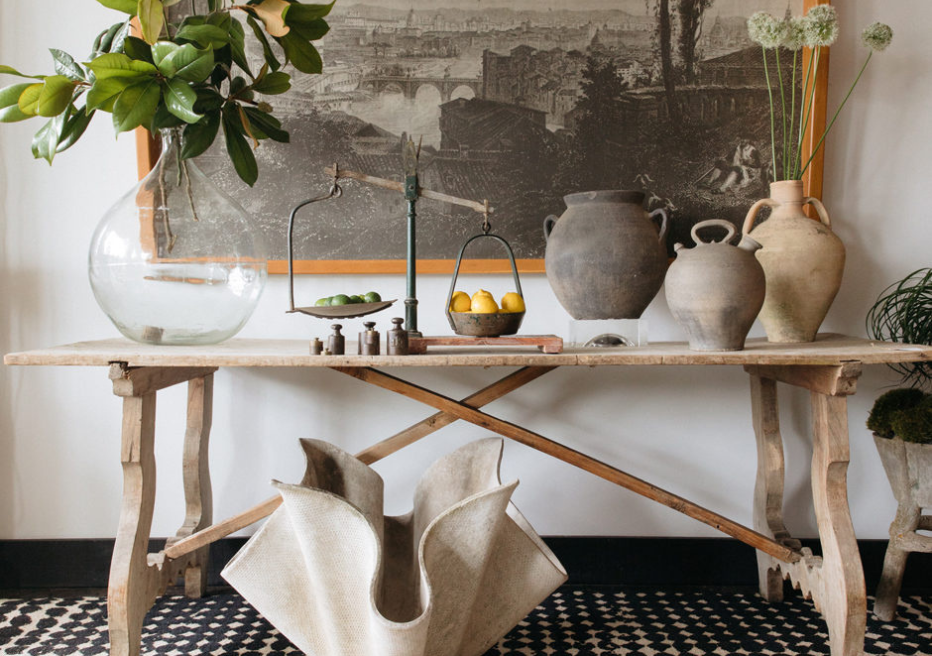
Lever 1: Findability — make it easy for the right clients to find you
What if you spent hours designing a gorgeous master bedroom … but locked the door when you left so no one could enjoy it? Sounds a bit crazy, right?
Well, the same could be said for websites. Many people spend hours and hours designing their websites. Yes, it’s pretty. But it doesn’t include the right strategies to draw in the right audience. So it just sits on the internet, buried under thousands of higher-ranking sites.
Now that we know how easy it is to get lost in the shuffle of competitor websites, how can you stand out so your ideal client can easily find you?
Optimize for SEO
SEO (Search Engine Optimization) and its newer cousin, AEO (Answer Engine Optimization), are all about helping the right people find you online. SEO makes sure your dream clients can discover you on Google, while AEO helps you show up in AI-powered tools and “instant answer” results. Don’t worry—it’s not as technical or scary as it sounds. Think of it as another way to let your design voice shine online.
Here’s how to do it:
- Write like a real person.
Avoid stiff, keyword-stuffed language. Instead, tell stories and answer questions in a way your clients actually speak. Writing like this will naturally bring in keywords and questions your audience is searching for on the internet or in AI. - Know your audience.
Who are they? What problems are they trying to solve before hiring a designer? Think about the exact words they might type or ask, like:- “Small kitchen renovation for families”
- “Heritage-infused luxury interior designer”
- “How much does a designer cost in Los Angeles?”
Then, answer these questions in blog posts, service pages, or FAQs.
SEO tip
The keywords your audience is searching for need to be added to page headers, title tags, meta descriptions, and opening paragraphs. The benefits are twofold: it will help optimize your pages for search, and it will make your website genuinely helpful for the clients you want.
Show up where your ideal clients spend time
Visibility isn’t about shouting into every marketing channel; it’s about being present in the right rooms. Think of it this way: your dream client is already reading certain newsletters, listening to certain podcasts, following certain brands, and attending certain events. Your job is to find out where they hang out, quietly step into these places, and add value.
But how can you identify these “watering holes” where ideal clients gather?
Depending on your niche and location, that might look like:
🔑 Local lifestyle magazines, neighborhood papers, or city-focused websites
🔑 Real estate, architecture, or home-builder newsletters and blogs
🔑 Trade publications that homeowners read for inspiration (kitchen and bath, remodeling, luxury homes, green building, etc.)
🔑 Podcasts about home, family life, local business, or lifestyle in your city
Brands your clients already love: boutique builders, realtors, high-end furniture shops, cabinet makers, tile showrooms, or local artists
Pick 2-3 that feel like a strong fit for your style, price point, and ideal client, and focus there instead of trying to be everywhere at once.
The goal isn’t to “go viral”; it’s to be remembered. When someone keeps seeing your name pop up in places they already love, it stops feeling like chance and starts feeling like, “I should talk to them about our remodel.”

Lever 2: Clarity — remove any confusion from your website
Think of your website like a first design consult. Your client has questions, emotions, and a little bit of anxiety swirling around in their head. Clarity is what helps them exhale. When your words feel grounded and straightforward, people feel seen and guided—rather than sold to or confused.
Start with clarity, not cleverness
Clever headlines are fun in branding, but on your website, clarity wins every time. Your homepage header should answer two questions immediately:
- What do you do?
- Who do you do it for / how are they better off?
Don’t make them interpret your words. Tell them exactly what you do. Here’s how this looks:
🔑 Full-service interior design in Austin
🔑 Design for busy families who want durable, beautiful homes
🔑 Interior design for high-end homes that blends clean lines with curated antique character
Ask yourself: Could a distracted, half‑multitasking client understand what I do in 3 seconds? If not, simplify.
Make your client the hero
This is where the “they’re the hero, you’re the guide” framework really comes to life. Your job is to clearly name what they’re experiencing, then show them the path forward. Instead of giving them vague information that feels stagnant and bland, you simply hold up a mirror to what’s already true for them and say, “You’re not crazy. This is hard. Here’s how we can make it easier.”
It might look something like this:
🔑 “You want a cohesive home, but you’re overwhelmed by decisions.”
🔑 “You’re tired of managing tradesmen and second-guessing big purchases.”
When you put their experience into words better than they can, something powerful happens—they start trusting you. They think, “If they understand the problem this well, they probably know how to solve it.”
From there, your messaging can gently follow a simple flow:
🔑 Problem: “Here’s what you’re facing.”
🔑 Solution: “Here’s how we work and what we handle for you.”
🔑 Benefit to them: “Here’s how your home and life feel on the other side.”
Build a seamless journey that leads them by the hand
Clarity isn’t just about the words—it’s about the flow. Each page should feel like you’re gently taking them by the hand and saying, “Start here, then go here, then do this next.” That means clear sections (Who you are, What you do, How it works, What it costs, How to start) instead of scattered, pretty-but-random content.
On every key page, they should always know:
🔑 Where they are (Services, Portfolio, About, etc.)
🔑 What this page is helping them decide
🔑 What the next logical step is if they’re interested
And don’t forget, you’re missing out if all your Call to Actions (CTAs) say “Learn More”…or even worse, you don’t even include CTAs. Every time you write a CTA, ask yourself one question: “Does the reader know exactly what will happen when they click this button?”
Try specific CTAs like this:
🔑 “Start Your Project Inquiry”
🔑 “See How My Design Process Works”
🔑 “Book a Discovery Call”
Make the next step ridiculously obvious so you stop losing potential clients to indecision.
Lever 3: Credibility — earn trust in seconds
Do you know how fast it takes people to judge your website? Half a second. Yes, you read that right. People form an opinion about your website within the first 50 milliseconds.
I know that immediately feels like a lot of pressure, but let me put you at ease. All this means is that you need a header that grabs their attention so they’re more likely to scroll down.
We talked about the header earlier in this blog. Remember, tell your audience exactly what you do and who you do it for. If this resonates with your reader, they’ll keep reading.
Even though you’ve now grabbed your audience’s attention and they’re intrigued, they’re (often subconsciously) looking for three things: proof that you’re real, reliable, and worth their time.
A well-structured homepage follows a specific trust-building path
A well-structured homepage follows a specific trust-building path — almost like taking your visitor by the hand and walking them through a story. Here’s how to keep your audience engaged from beginning to end.
Immediate social proof
This is where you show them they’re not taking a risk. Add logos, testimonials, or short case studies that essentially say, “Others trusted us — and they’re glad they did.” It lowers their guard instantly because it signals safety and credibility without you having to say it outright.
Authority markers
Do you have awards, press features, or certifications? Add those to your website. It’s a great way to say, “I know what I’m doing,” and reassure them that they’re in capable hands.
A thoughtful About page
Your About page is where you get to pull back the curtain. Tell your story. Share why you care. Help your audience understand who you are and why they can trust you. It’s one of the most powerful places to build connection and credibility, so don’t be afraid to let your personality come through.
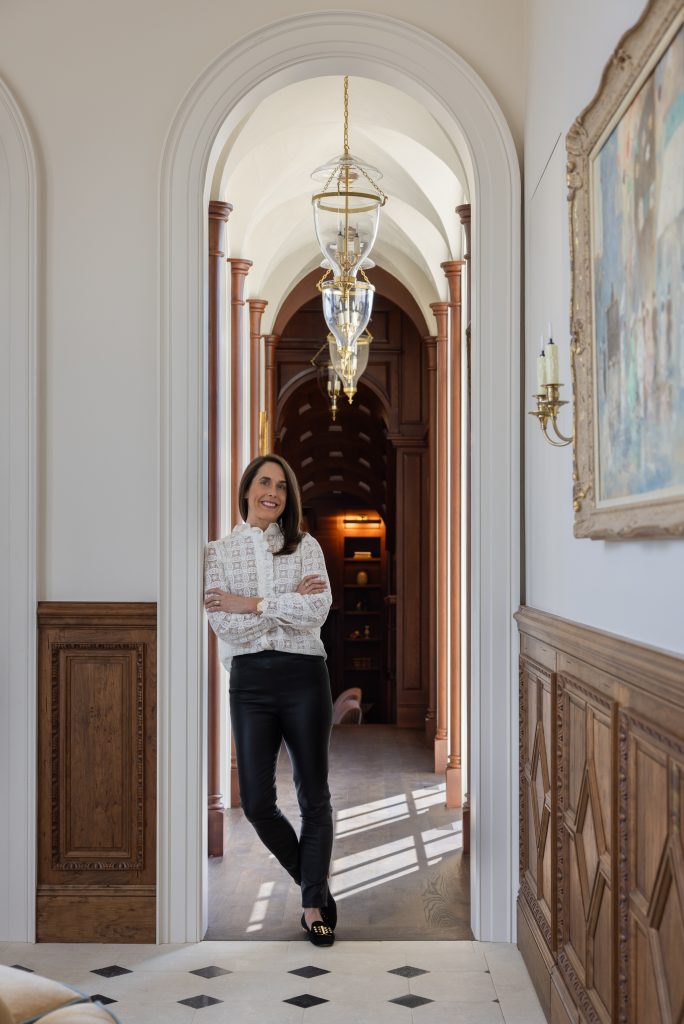
Pull clients in with your portfolio
A portfolio says a million words about your design talent—so make sure it’s up to date, and you’re showing off your best work.
Turn client projects into mini case studies. What was your process? How did you solve your clients’ biggest problems? What were the outcomes? When you clearly lay out how you tackle a project, step by step, your audience feels at ease because they just got a blueprint for how you would work with them.
And remember, in your portfolio, you want to show outcomes, not just pretty photos. Before and after photos are a great way to prove to clients how you maximized the space in a room, used lighting to illuminate a space and modernize the overall appearance, and created a solution for storage issues.

Lever 4: Frictionless booking — make it easy to say “yes”
I’ve hinted at this a few times already, but it’s worth giving its own spotlight: if someone is ready to talk to you, don’t make them work for it. Your booking experience should feel like an open door, not a maze.
Give theM two clear ways to reach you
Many designers offer two pathways: a quick discovery call or a more detailed inquiry form. There’s a reason both can (and should) coexist — people like choices, and different personalities gravitate toward different booking styles.
1. The fast track (discovery call)
Some people just want to get right to it. No long forms. No back-and-forth. Just, “Can we talk?” A scheduling link with 2–4 quick questions is perfect here. It’s the fast-pass version of your booking process: minimal friction and maximum momentum.
2. The deep dive (inquiry form)
Others feel more comfortable laying everything out upfront — budget, timeline, style, location, the whole picture. A thoughtful inquiry form helps them express what they need and helps you qualify leads quickly. It’s a win-win: they feel heard, and you get clarity.
As a reminder, you want to reduce friction everywhere you can. Here are a few simple tips:
🔑 Make your CTA impossible to miss
🔑 Make your CTA super clear so they know exactly what will happen when they click
🔑 Ensure booking options are visible above the fold (no scrolling required)
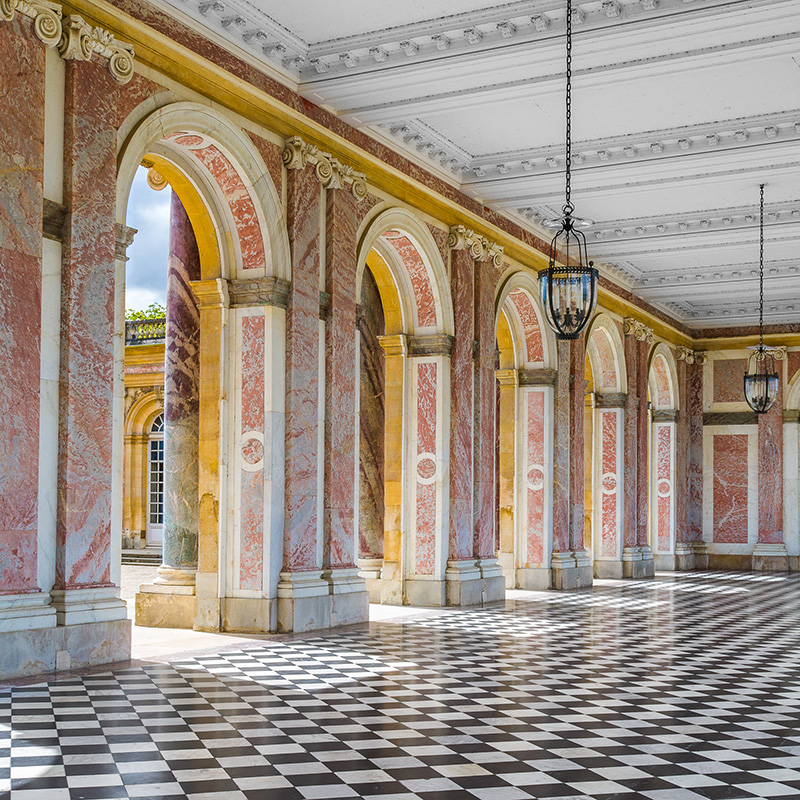
photography by Amy Barnard
Lever 5: Nurture — stay top of mind for fence-sitters
Even if you have an incredible website, most clients won’t schedule a call on their first visit.
Some are six months away. Others are secretly stalking your site weekly, waiting until they have the funds to begin their dream project. The point is, many people are interested in your offer, but just aren’t ready to commit.
Your job? Make sure they don’t forget you.
Create lead magnets that actually matter
A lead magnet is when you give people something of value in exchange for their email address.
I repeat, it needs to be valuable to them. If you’re going to ask for someone’s email, you need to give them something worth opening. Offer tools that make their life easier right now, even before they hire you.
Try something like this:
🔑 Room Budget Calculator: it helps them get a realistic sense of what their project might cost.
🔑 Renovation Timeline: it shows how long things actually take and helps them plan ahead.
🔑 3 Questions to Ask Before Hiring a Designer: it builds trust and positions you as a transparent expert.
When they download something truly useful, you instantly become the designer who helped them—not the designer who marketed to them.
Set up a simple 5-email nurture sequence
Once you have their email address, you can begin sending them valuable information. I’m not talking about spam. I’m talking about a warm, helpful drip of value that gently builds trust over time.
Ultimately, you want to stay top of mind for these people. There are a lot of online distractions in today’s world, but if you can cut through those distractions with interesting, helpful emails, your audience will look forward to your emails, not immediately delete them before they’re even read.
Transform your interior design website into an impactful business tool
Creating a website that stands above your competition is incredibly hard…trust me, I know.
If you’re ready to turn your website into a client-booking machine, start with one lever. Refine it. Optimize it. Then move to the next. A few small improvements can create a dramatic ripple effect—not just in inquiries, but in the quality of clients you attract.
And if you want ongoing support and practical strategies for growing your design business, Circaphiles is exactly what you’re looking for. Our community of interior designers shares tips, resources, and real-world advice so you’re never figuring it out alone.